Studio note
Where California's Zone 0 rule actually stands in 2026, and how to make the first five feet around your home ember-resistant without losing the garden.
If you live in the hills or canyons of Orange County, you have probably heard about Zone 0, the idea of keeping the first five feet around your home clear of anything that can catch an ember. It is worth understanding what the rule actually is right now, because there is a lot of confusion, and worth acting on regardless of the paperwork.
Where the Zone 0 rule actually stands
Here is the honest version. A 2020 state law (AB 3074) directed California to create an ember-resistant zone in the first five feet around homes in the highest fire hazard areas. As of 2026, the detailed statewide regulations are still in the rulemaking process. They are not yet a mandate in force across California. Some local jurisdictions have moved ahead of the state on ember-resistant requirements, and the direction of travel is clear: the first five feet is coming, and homes in high fire hazard severity zones will be first. So this is less about a deadline that already passed and more about getting ahead of one that is on the way.
Why the first five feet matter most
Most homes that burn in a wildfire are not lost to a wall of flame. They are lost to embers, wind-carried sparks that land in a dry planting bed, a pile of bark mulch, or against a wooden fence touching the house, and smolder until they ignite the structure. The zone closest to the wall does the most damage and gets the least attention. Clearing and hardening those first five feet is the single highest-value fire step most homeowners can take.
What ember-resistant actually looks like
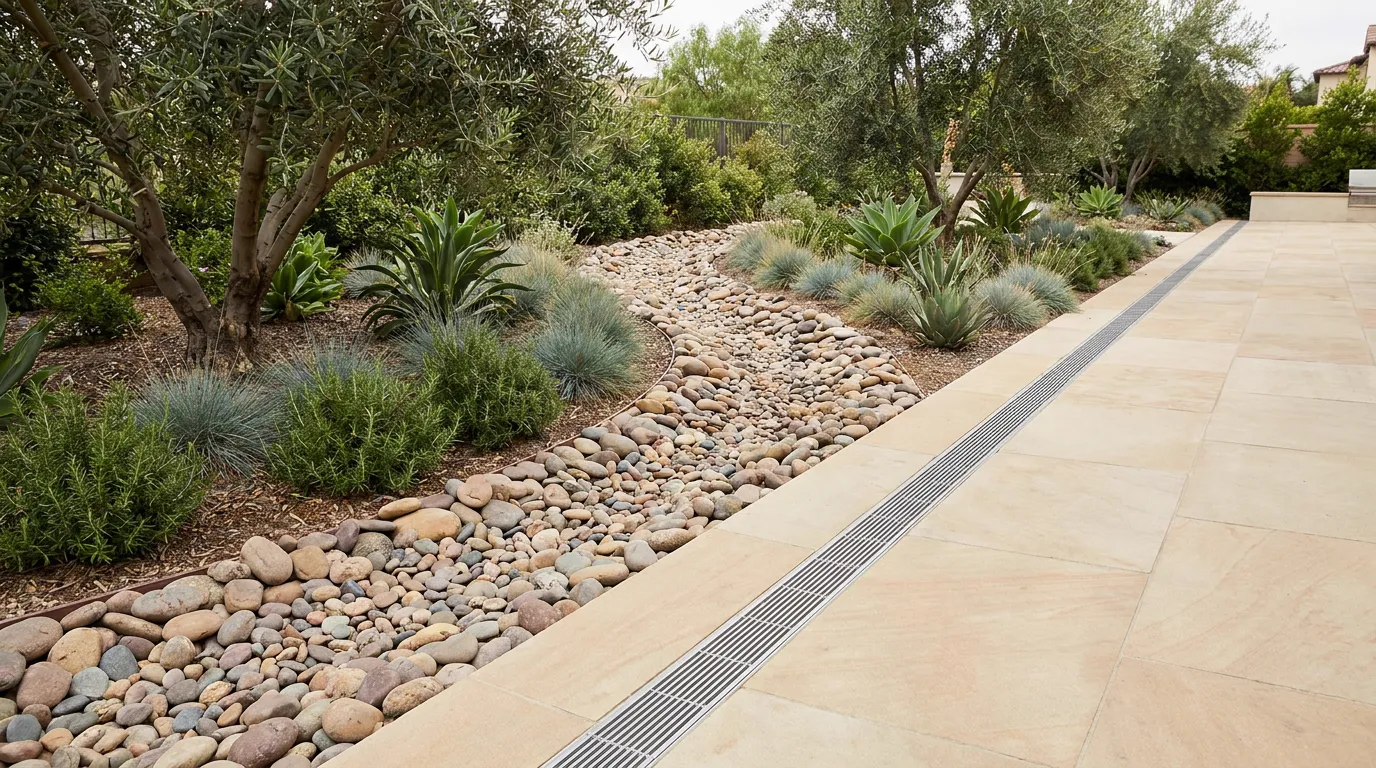
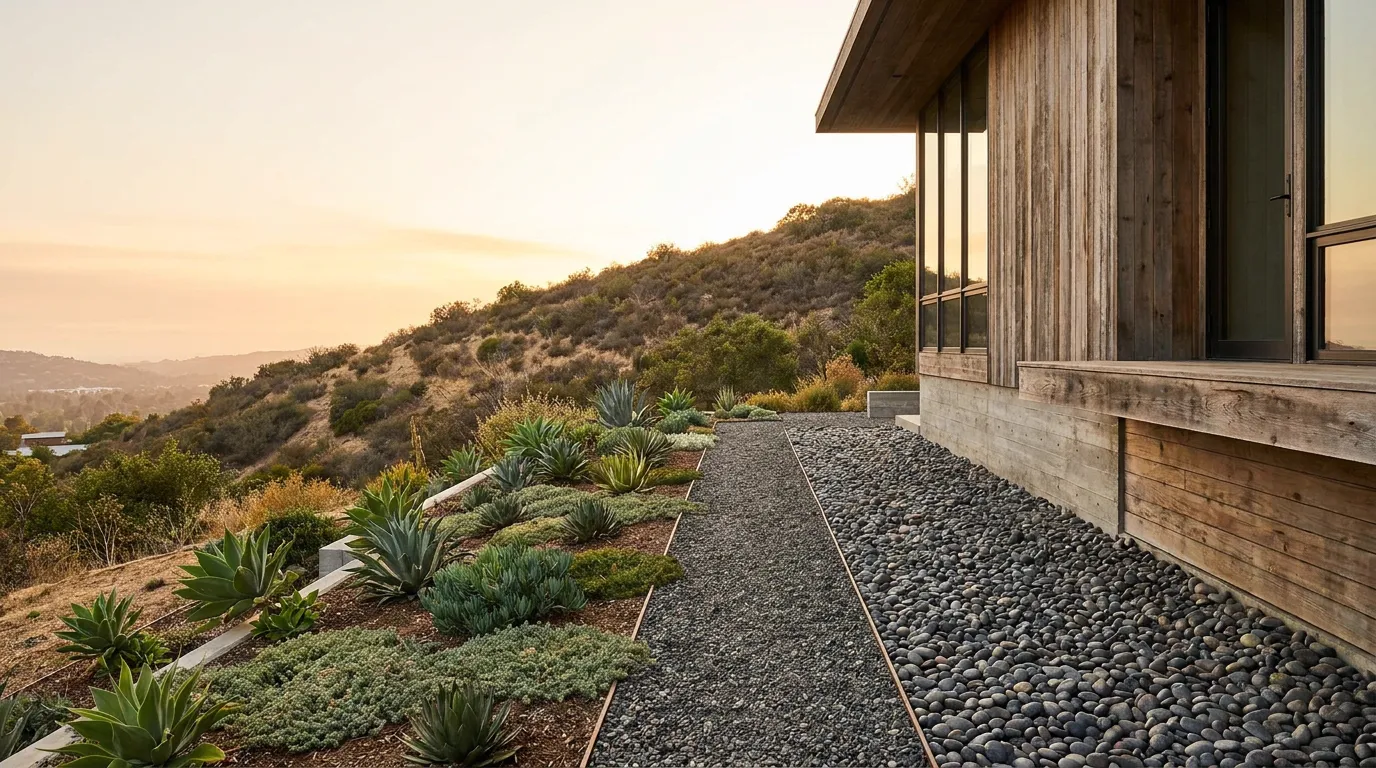
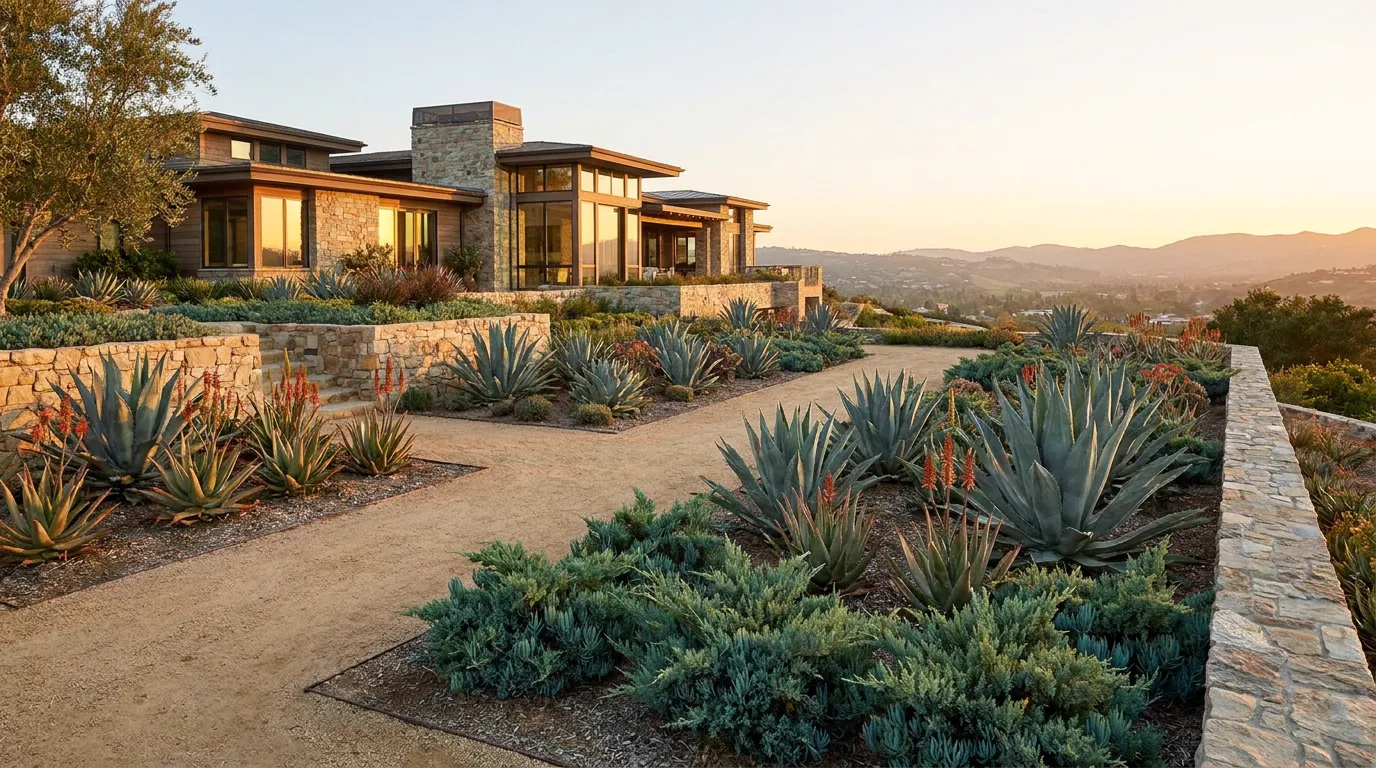
Fire-smart does not mean gravel and nothing else. Done well, it is still a designed landscape. Non-combustible ground in the first five feet uses stone, decomposed granite, pavers, or hardscape instead of wood mulch against the house. Fences and gates that touch the home are built from metal or masonry rather than wood, so a burning fence is not a fuse to the structure. Fire-wise planting further out favors well-hydrated, low-resin, low-litter plants, spaced to break up fuel instead of forming a continuous mat. And clean maintenance keeps leaf litter cleared from roofs, gutters, and the base of walls, where embers collect. Further from the house, the planting can be as lush as any other Orange County garden. The discipline is concentrated where it counts.
Design and defensibility together
The mistake is treating fire safety and good design as opposites. They are not. A gravel-and-stone band at the foundation can read as a clean modern detail. A masonry seat wall can replace a wood fence and add function. Fire-wise plant lists include plenty that are beautiful and water-wise. As a C-27 licensed design-build studio (CSLB #1127515), we design the defensible layout and build it as one project, so the result protects the home and still looks like somewhere you want to be.
Whether or not the statewide rule is final where you live, hardening the first five feet is a sound move now. It lowers risk this fire season, it can help with insurance conversations, and it puts you ahead of regulations that are clearly heading toward the first five feet. Every plan comes with a written line-item estimate, and our approach is documented site-first, the same discipline behind our 5.0 star rating across 90 Google reviews. If your home backs up to open space, a walkthrough is the place to start. Request a site review and we will reply within one to two business days.