Studio note
Standing water in an Orange County yard usually points to a site-drainage problem. Learn when channels, grading, downspout tie-ins, or French drains fit.
Many Orange County yards have clay-heavy or compacted soil that absorbs water slowly during a strong storm. Water can collect beside hardscape, cut channels through planting beds, or leave a low section of lawn wet for days. If the same corner holds water after repeated storms, the useful question is not how much rain fell. It is where that water can move safely as part of the landscape system.
Why Orange County yards flood
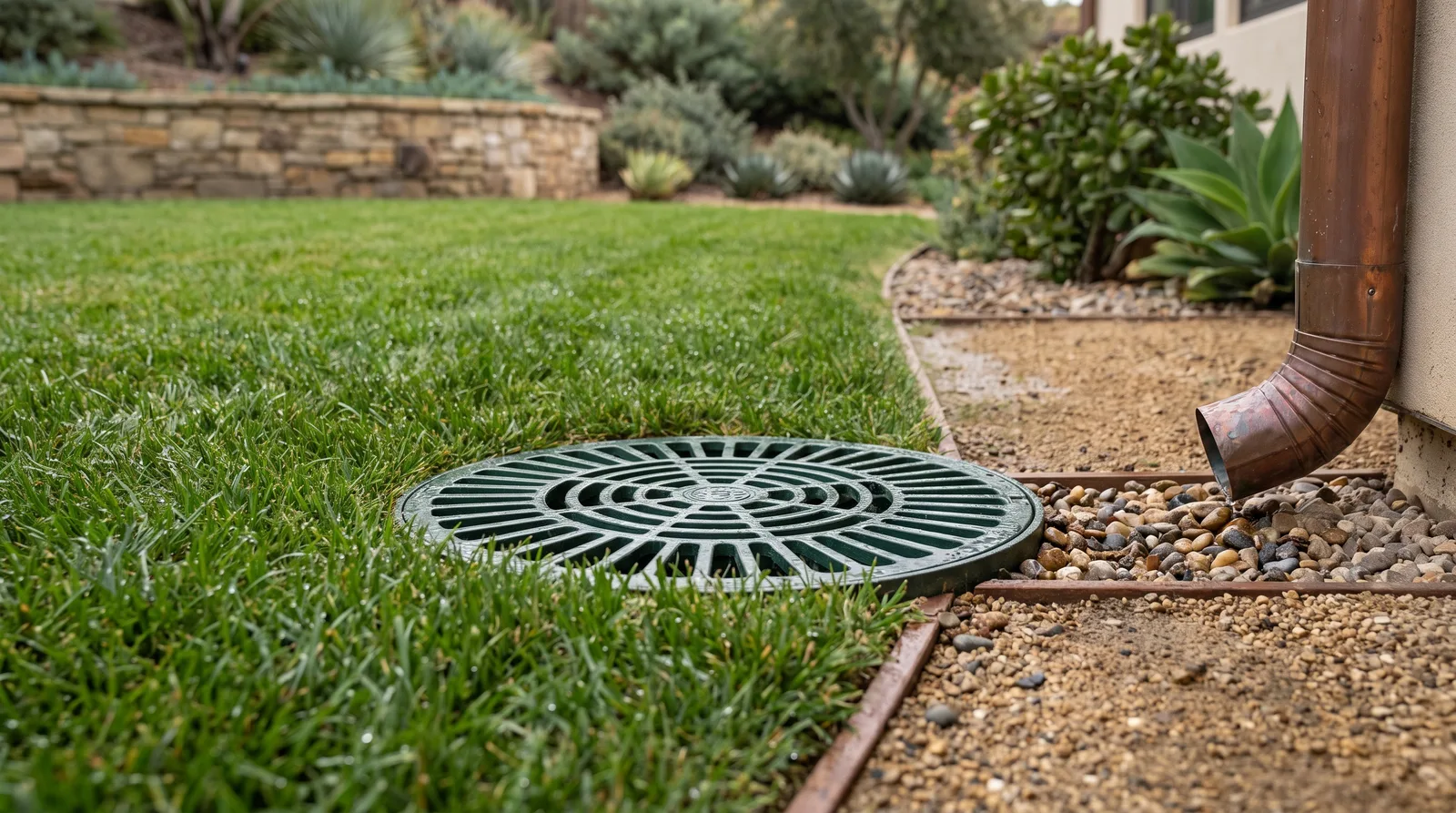
Several site conditions often overlap. Clay-heavy or compacted soil can drain slowly. Older grades may leave a low point beside a patio, wall, or the home. Hardscape sheds water instead of absorbing it, downspouts may discharge too close to the structure, and one surface can pitch toward another. The right diagnosis traces all of those inputs and identifies a lawful, workable outlet before anyone chooses a drain.
The fixes that actually work
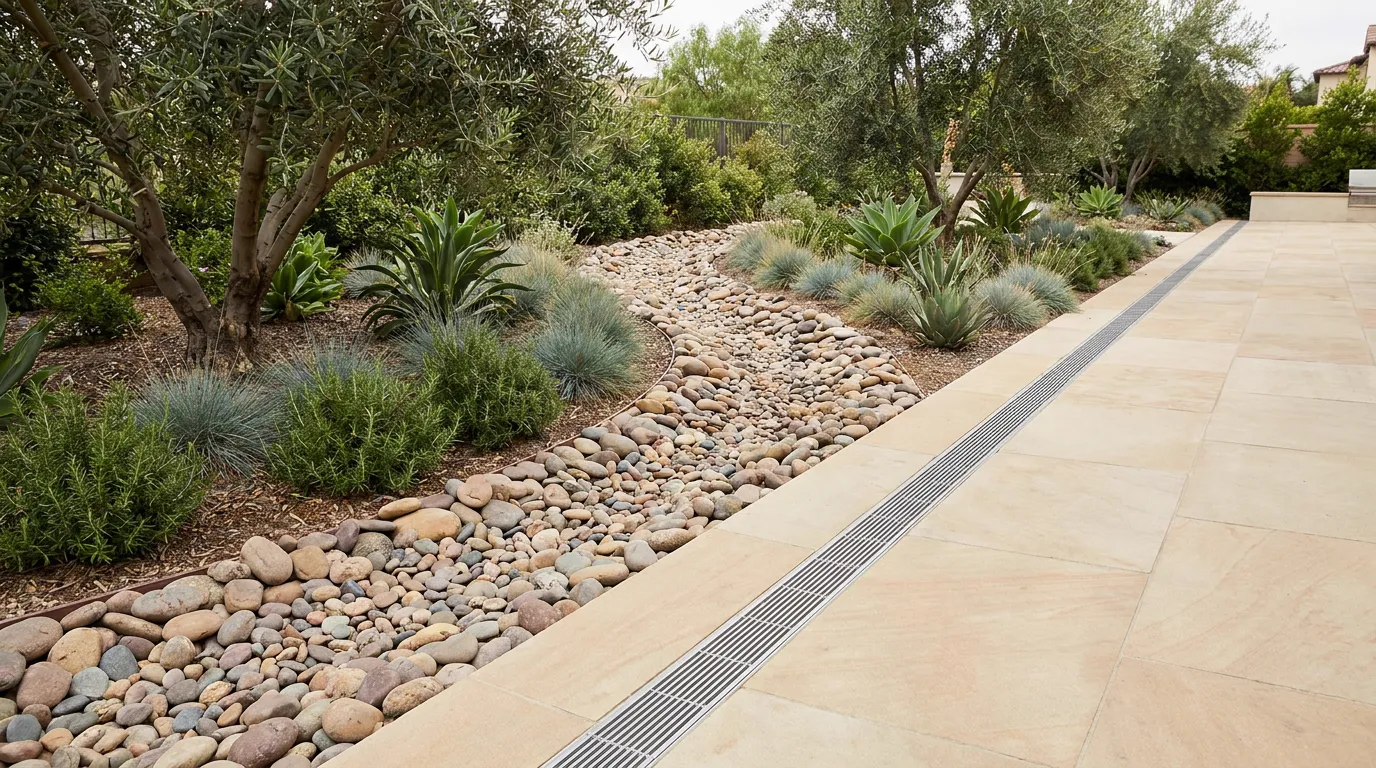
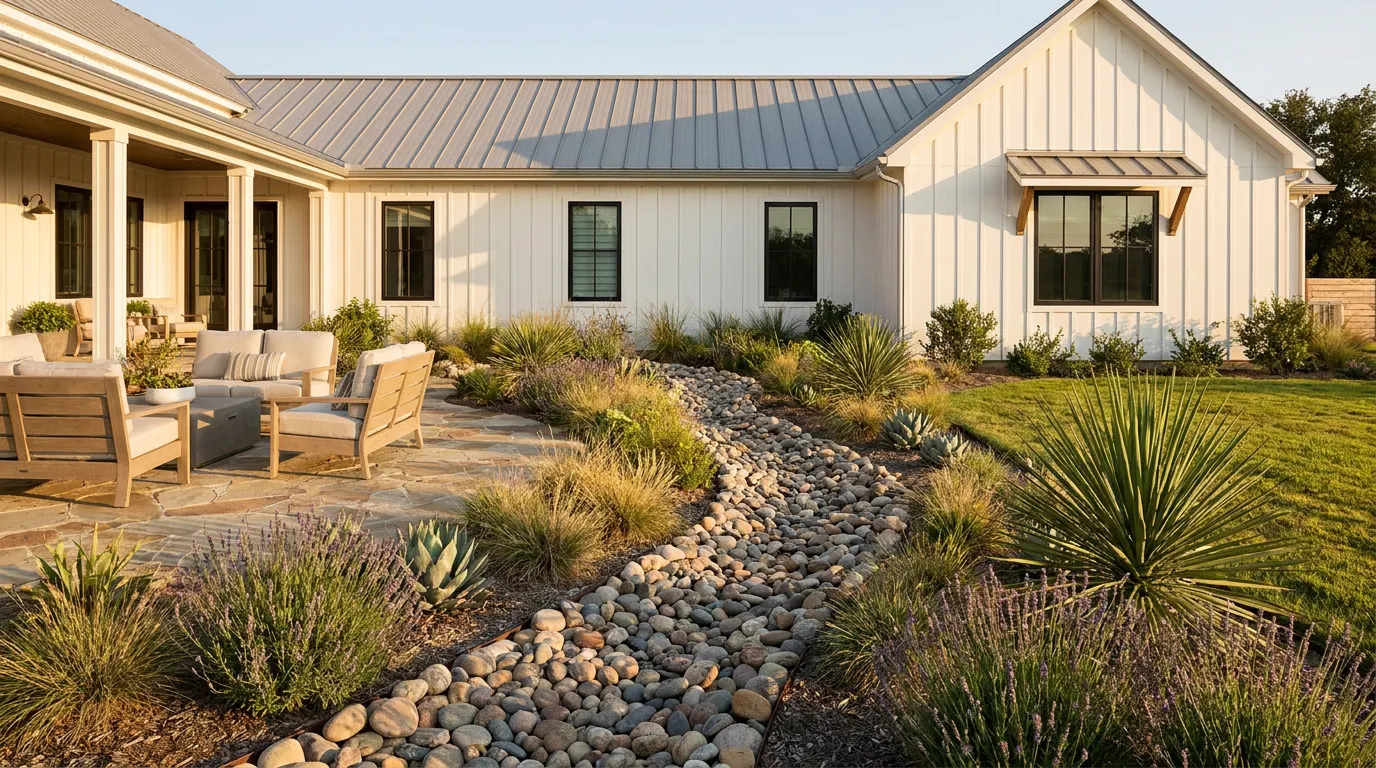
There is no single product that solves every yard. We design the solution around how water moves across your specific site. French drains use a gravel-filled trench with a perforated pipe to collect subsurface water and carry it to a safe outlet, best for saturated lawn and beds. Channel and area drains are surface grates set into patios and low points that catch water before it reaches the house. Dry creek beds move surface water through a designed river-rock channel that reads as part of the garden rather than a utility. And sometimes the answer is simply regrading the slope and piping roof water to the street, not adding drains at all.
Fix it in the dry season
Drainage is easier to plan before the storms arrive. Dry, workable ground usually makes investigation, trenching, grading, and surface restoration more predictable, and it gives the whole system time to be completed before the wetter season. Waiting until water is already standing can narrow scheduling and design options.
What it costs
In our current Orange County design-build practice, focused single-element landscape projects start around $15,000. Drainage scope can rise when a site needs multiple collection points, regrading, downspout tie-ins, a lawful outlet, hardscape removal, or full surface restoration. We price the integrated landscape scope line by line after seeing the grades and discharge path, so the estimate identifies what will collect the water, where it will go, and how the finished surface will be restored.
Why the diagnosis matters
Drainage affects every visible layer above it. A poor outlet or incomplete grade can leave hardscape, walls, root zones, and planting exposed to repeated water problems. As a C-27 licensed landscape design-build studio, C-27 1127515, GREENPLACE Inc reads the whole site first: soil, slope, roof-water inputs, existing hardscape, and where the water can lawfully discharge. We design drainage as part of that integrated landscape system rather than advertising standalone storm-drain, sewer, or drain-cleaning work.
If part of your yard holds water after storms, send us a photo and request a free design concept and estimate. The on-site visit typically takes 30 to 60 minutes. We will trace the grades and water sources, explain what can be assessed from the site, and follow with a written landscape plan and line-item estimate when the project is a fit.