Studio note
On the California coast, wind is what decides whether an outdoor room ever gets used. Here is how we solve it, and why a solid wall is usually the wrong answer.
People rarely stop using an outdoor space because it is ugly. They stop because it is uncomfortable. Within a few miles of the water in Southern California, the afternoon onshore breeze is dependable enough to set a clock by, and it is the single reason a beautifully built patio ends up as somewhere you walk past rather than sit down. Before we design anything else on a coastal property, we work out where the wind comes from and what it will take to stop it.
Why a solid wall is usually the wrong fix
The obvious answer is to build the wall higher. It rarely works as well as people expect. A tall solid wall takes the light, takes the view, and can make the wind worse rather than better: air that cannot pass through a barrier accelerates over the top of it and drops back down on the other side, so you get a turbulent pocket a few feet in from the wall, right where the seating usually goes. On a small courtyard, a solid barrier can also make the space feel like a shaft.
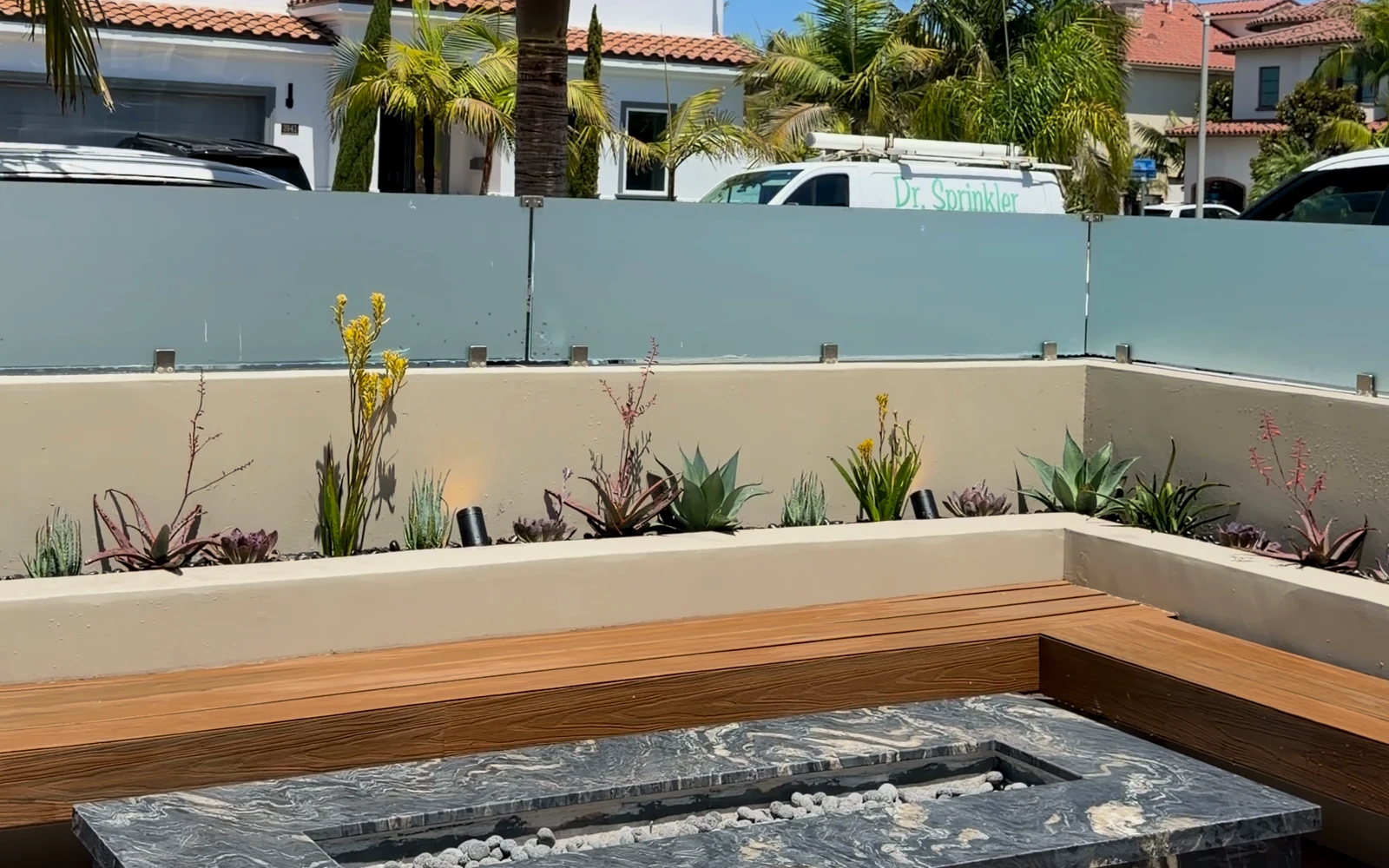
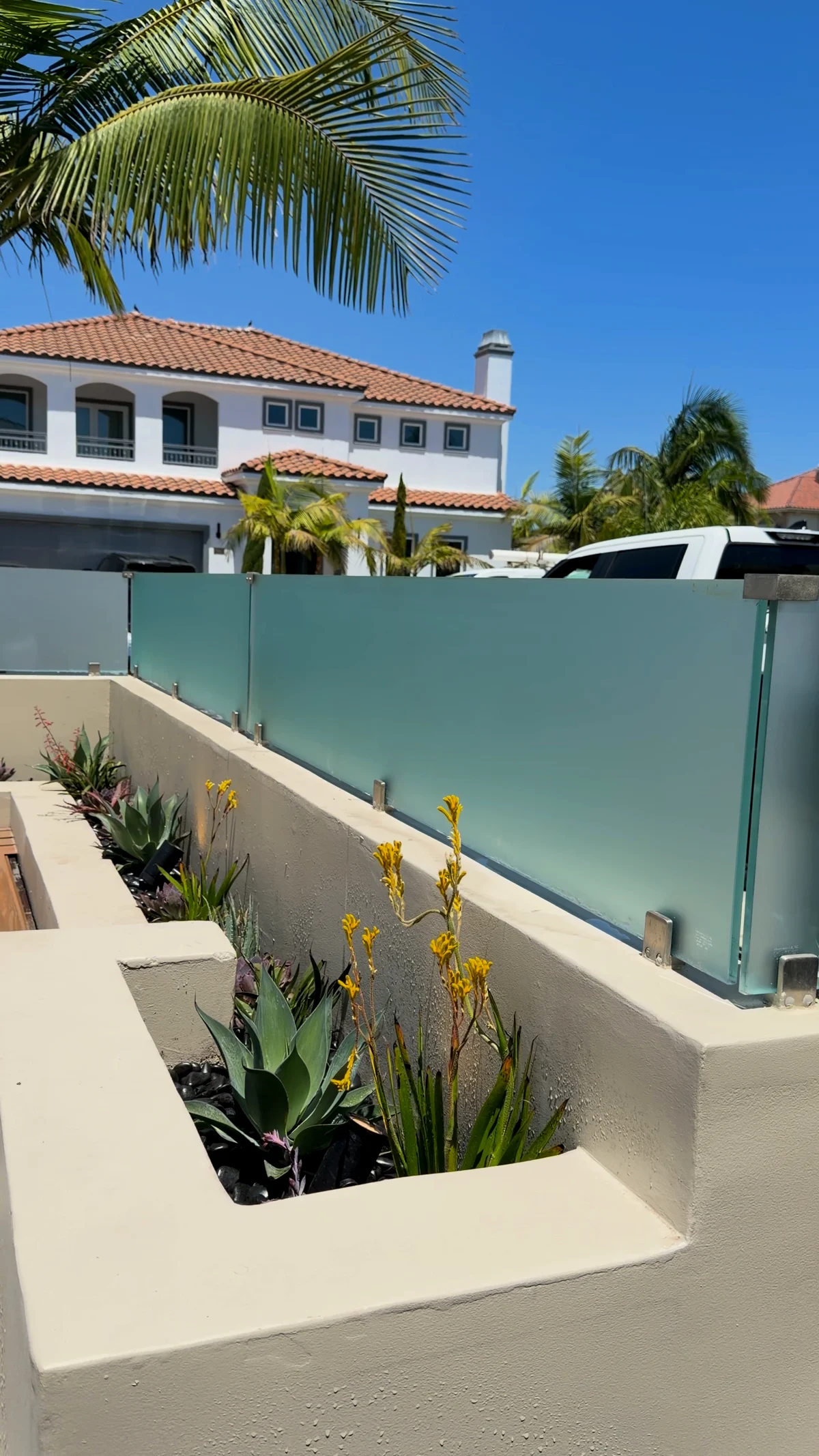
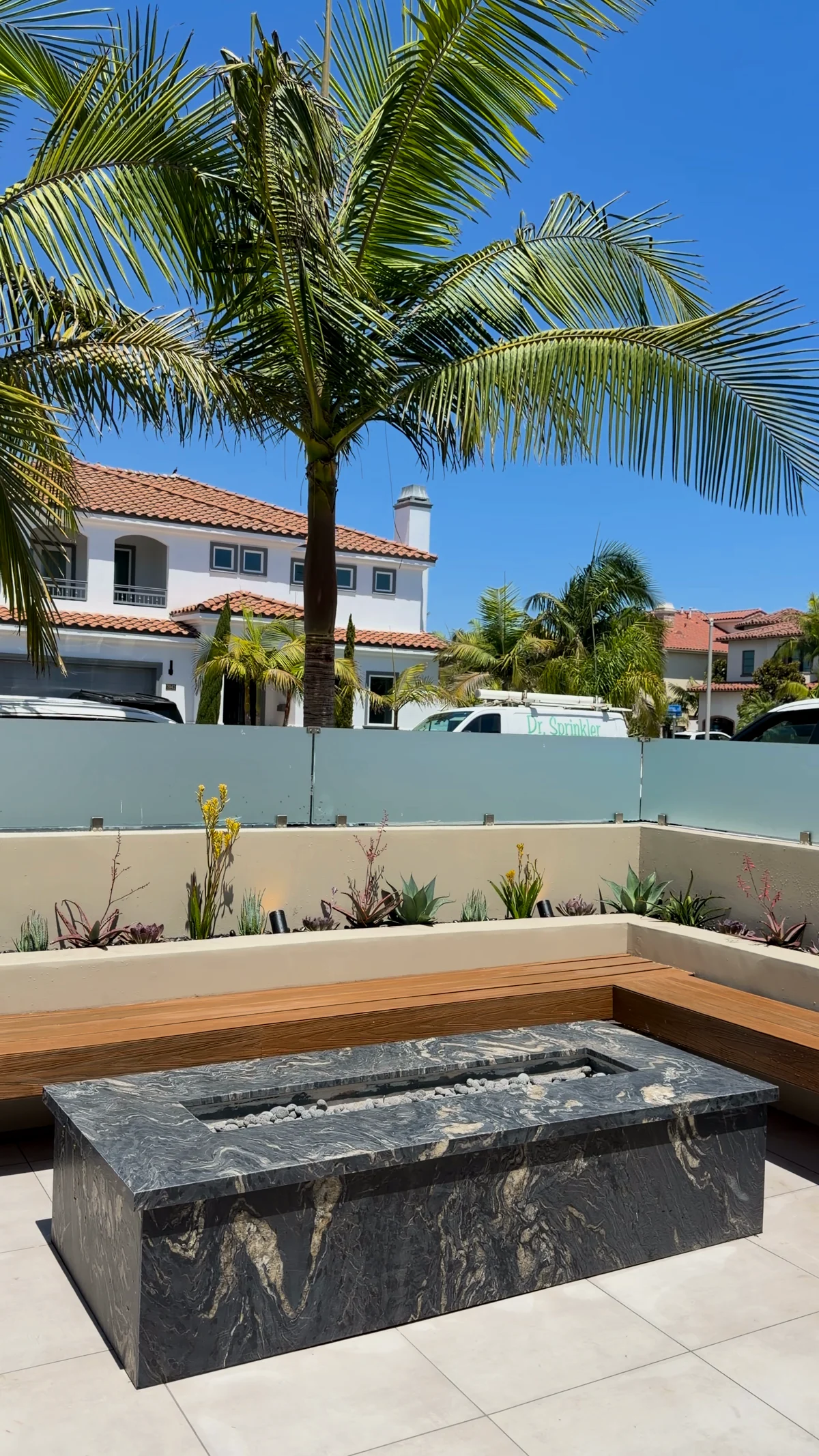
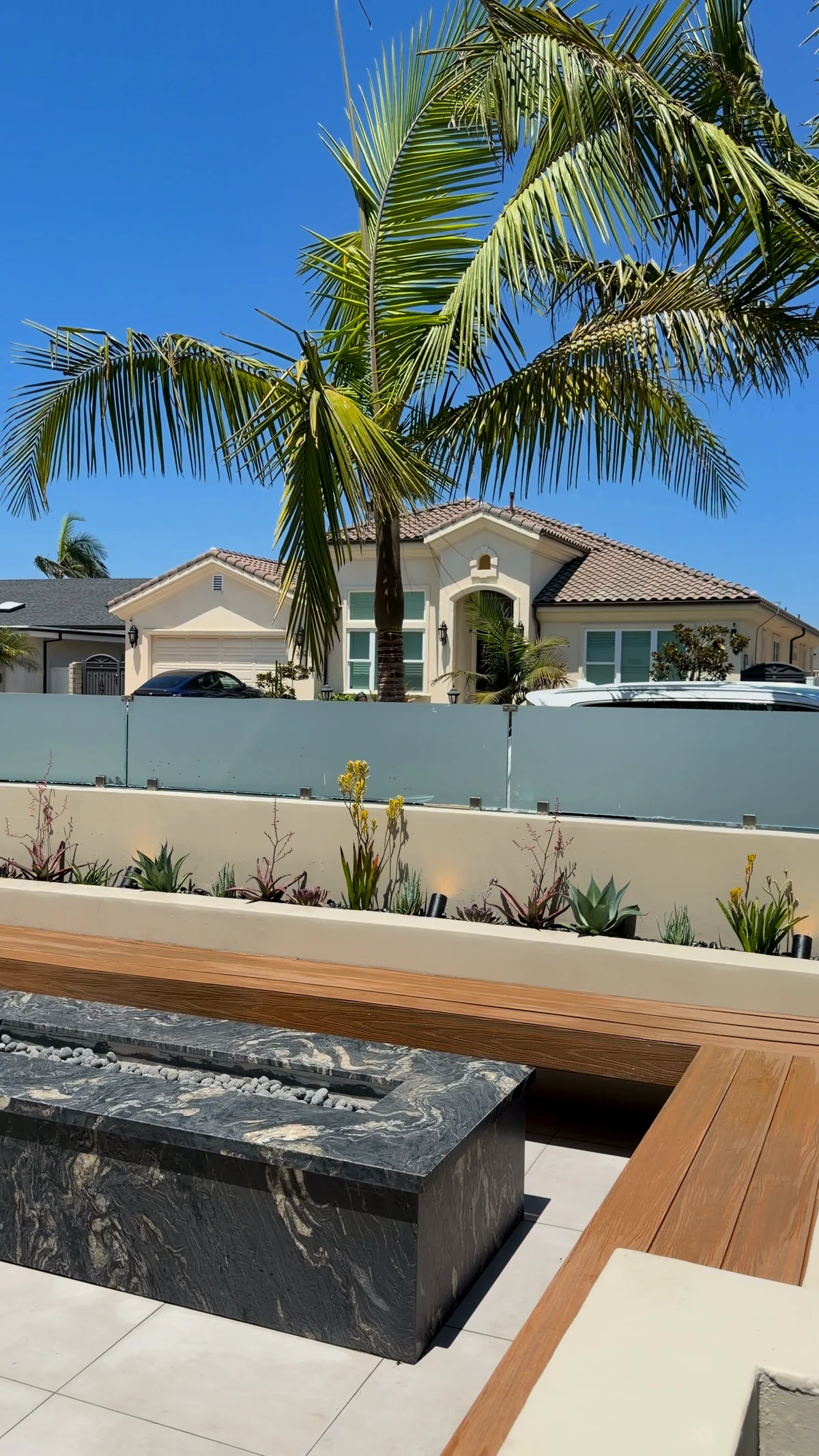
What actually works is a barrier that stops the wind at seated height while keeping the space open above it. On this Huntington Beach courtyard that meant frosted glass panels on stainless standoffs, set on top of the planter walls. The glass cuts the breeze where people sit, passes daylight straight through, and keeps the sightline out to the street trees and sky. Frosted rather than clear was a privacy decision: this is a front courtyard on a walkable street.
Everything else follows from that one decision
Once the wind is handled, the rest of the room can be built for comfort rather than endurance. A bench that cantilevers off the planter wall keeps the floor clear, so there is nothing to move when the space is cleaned and nothing to blow over. A fire table in solid stone stays where it is put and gives the courtyard a reason to be used after the temperature drops, which on the coast is most evenings. Lighting matters more here than inland, because the usable hours are the cooler ones.
Planting that survives salt air
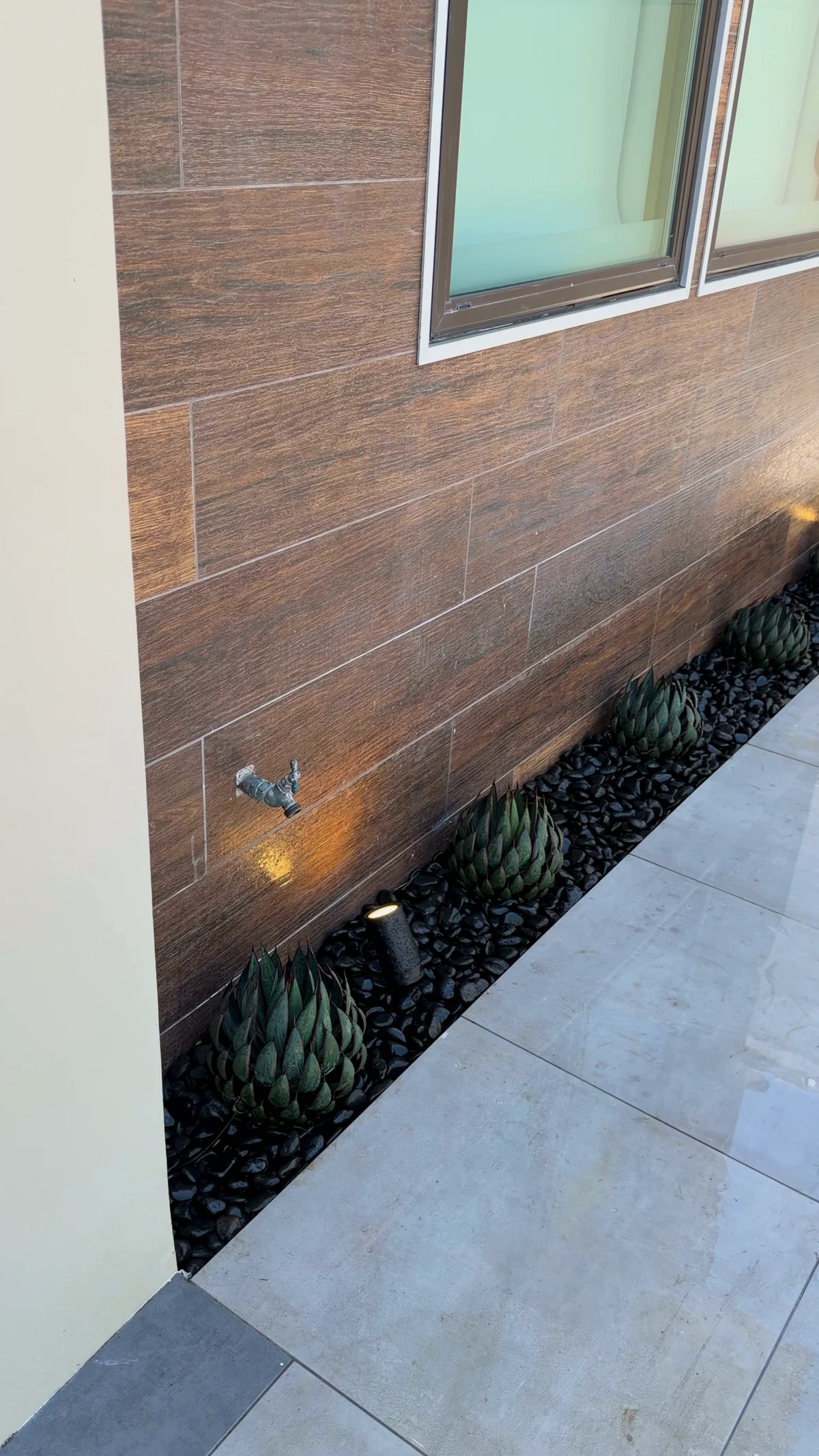
Coastal exposure is not only wind. Salt in the air burns tender foliage, and the same breeze that makes a patio uncomfortable also dries plants faster than an inland site. The palette here is built from things that evolved for it: agave, aloe, kangaroo paw, phormium and ornamental grasses, set in black pebble rather than bark so the mulch does not blow around. The result needs very little water and looks the same in August as it does in February.
Spacing matters as much as species. These beds are planted for the size the plants will reach, which means they look deliberately open on handover day. Packing a coastal bed to look full immediately produces a thicket that traps salt and moisture against the foliage, and thinning it later means pulling out plants that were paid for.
What to ask before you build
If you are planning an outdoor space within a few miles of the water, three questions are worth settling before anything is priced. Which direction does the wind actually come from in the hours you want to use the space, which is often not the direction you assume. What height does the barrier need to reach to protect seated people, rather than standing ones. And does the material you are considering pass light, because on a small coastal lot the difference between a screen and a wall is the difference between a room and a corridor.
The front yard is usually the overlooked one
This courtyard was a walkway people crossed on the way to the front door. On tight coastal lots the front is often the flattest, most private and best oriented space on the property, and it is almost always the one nobody considers using. It is worth asking whether the space you already walk through every day could be the one you sit in.
GREENPLACE Inc is a C-27 licensed design-build landscape studio, C-27 1127515, working across Orange County and Greater Los Angeles, with a 5.0 star rating across 90 Google reviews. If the wind is the reason you never sit outside, that is a solvable problem and the right time to look at it is before anything is built. Request a site review and we will reply within one to two business days with a written plan and a line-item estimate.