Studio note
How to choose coastal planting that handles salt air, wind, reflected light, and water discipline without turning every garden into the same succulent grid.
Coastal planting in Orange County is not just about drought tolerance. Salt aerosol, marine layer, onshore wind, reflected light, and shallow coastal soils all influence what survives and what stays composed. The best palettes look relaxed because the technical choices were made early.
Build with structure first
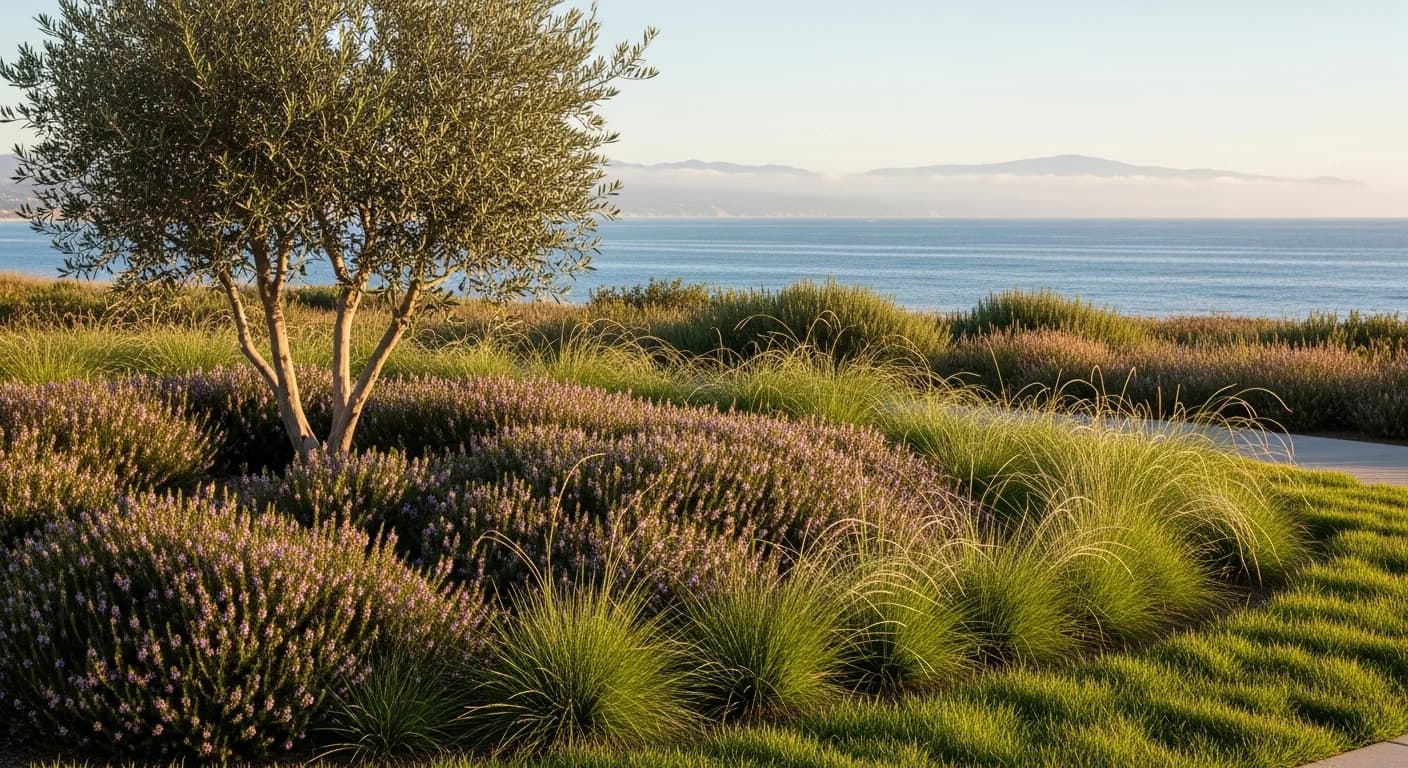
We start with durable structure: olive, westringia, agave, coastal rosemary, native sage, manzanita where appropriate, and low groundcover that can handle exposure. The exact species changes by site, but the principle holds: fewer forms, repeated with intention.
Use softness without fragility
A coastal garden needs movement. Grasses, silver foliage, and low mounding plants can soften hardscape without becoming high-maintenance. The trick is to use plants that recover from wind and salt rather than fighting the site every season.
Design restraint
A coastal palette should feel edited, not sparse. The difference is repetition, scale, and irrigation matched to real exposure.
Do not forget the hardscape microclimate
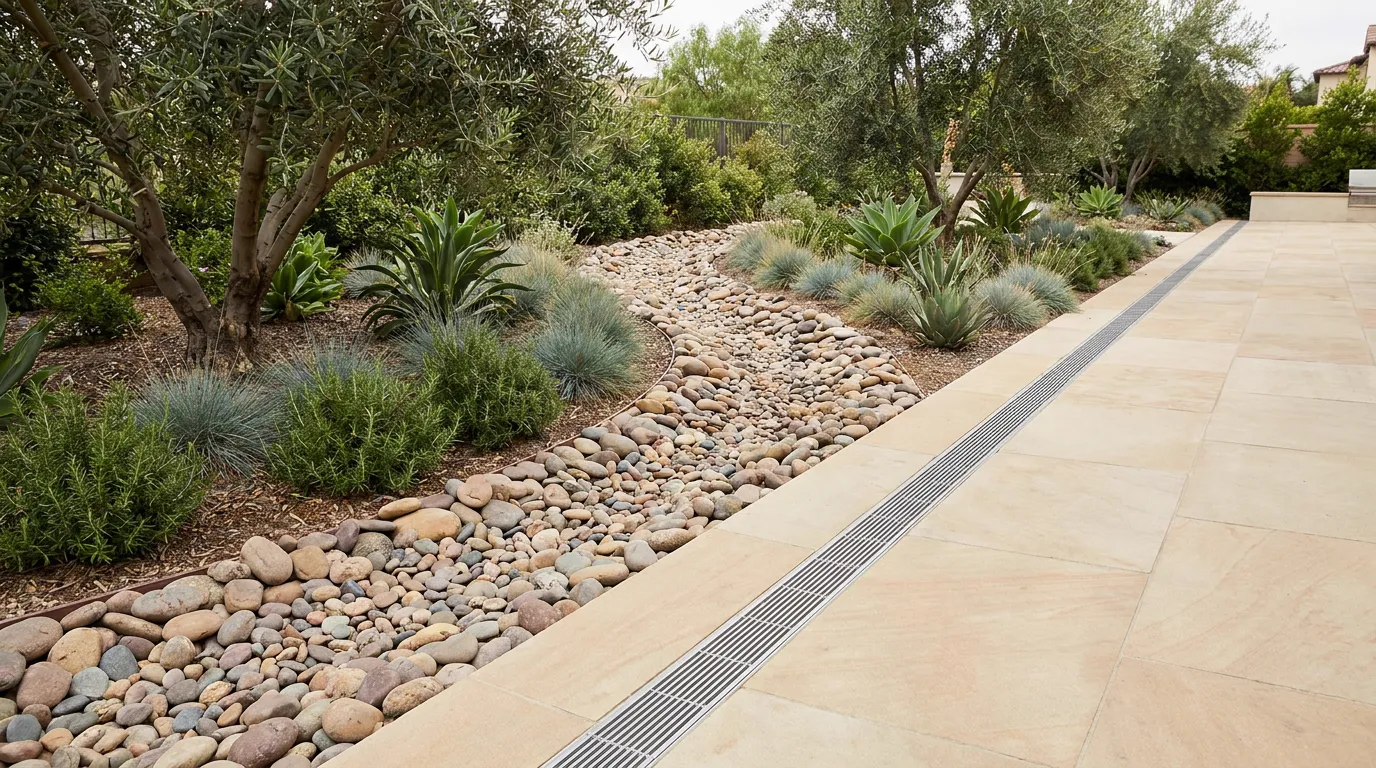
Walls, pavers, gravel, and concrete all change heat and reflected light. Plant selection should respond to those surfaces. A plant that performs in a breezy bed may struggle in a small west-facing pocket against stucco or stone.