Studio note
How clipped privacy, view control, mature specimens, and city review constraints shape a refined garden without making it feel like a wall.
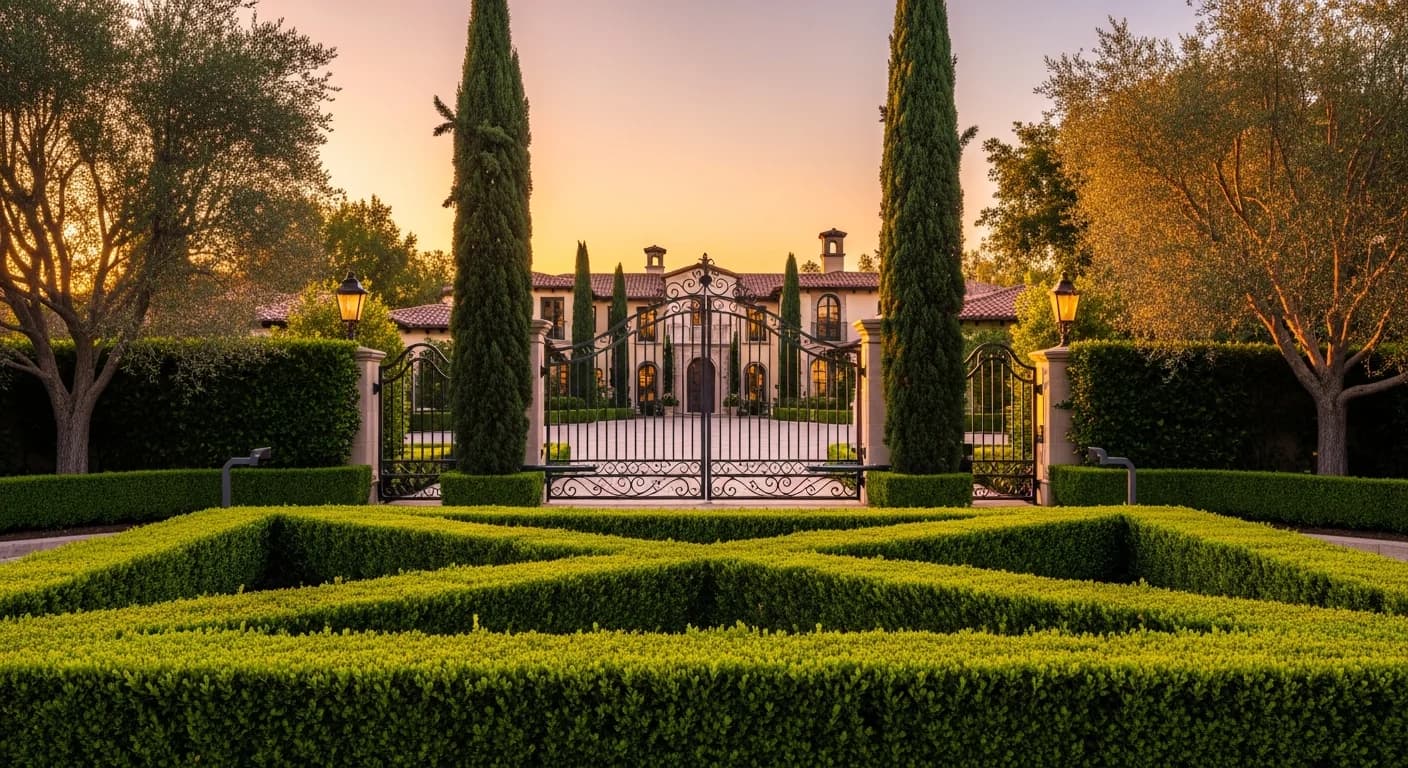
Privacy is one of the strongest drivers in Beverly Hills garden work, but a tall hedge alone rarely creates the best result. Good hedge architecture uses depth, offset layers, trunked specimens, sightline control, and maintenance access so the garden feels protected without becoming a green wall.
Privacy is a section drawing
The useful question is not only how high the hedge should be. It is what the neighbor, street, upper window, terrace, and garden user can see from each elevation. A section drawing often reveals that a lower layered strategy works better than one aggressive clipped plane.
Choose plant material for the maintenance reality
Podocarpus, ficus, pittosporum, privet, olive, cypress, and other privacy material all behave differently under clipping, heat, shade, and water stress. The right choice depends on soil, exposure, width available, desired texture, and how often the owner is willing to maintain the line.
Permit and code note
Walls, fences, hedges, setbacks, and height rules are local matters. Verify the current Beverly Hills Municipal Code and any applicable review requirements before committing to a privacy strategy.
Make the hedge part of the architecture
The strongest privacy gardens do not hide the hedge; they compose it. A clipped wall can frame an olive trunk, hold a plaster plane, catch evening light, or create a quiet backdrop for stone and water. That is when privacy starts to feel architectural.