Studio note
A practical design guide for defensible space thinking: zone logic, plant maintenance, ember-aware details, and where aesthetics still belong.
Fire-defensible landscape design is not the same as removing beauty from the property. It is a hierarchy of risk. The closer a material or plant is to the structure, the more disciplined it must be. Farther from the home, planting can become more expressive if fuel, spacing, irrigation, and maintenance are handled responsibly.
Think in zones, not in plant lists
CAL FIRE frames defensible space as zones around a structure. That zone logic should shape material choices, plant spacing, leaf litter management, fences, mulch, and where furniture or stored materials belong. A pretty plant palette cannot compensate for poor fuel management.
Embers change the design brief
In many wildland-interface conditions, embers are the practical concern. That means rooflines, vents, decks, fences, gates, under-eave planting, mulch near walls, and debris traps matter. The landscape has to be maintained as a system, not just installed once.
Important limit
GREENPLACE can design with fire-prudent principles, but site-specific code interpretation, structural requirements, and insurance requirements must be confirmed with the authority having jurisdiction and qualified specialists.
A designed defensible landscape can still feel complete
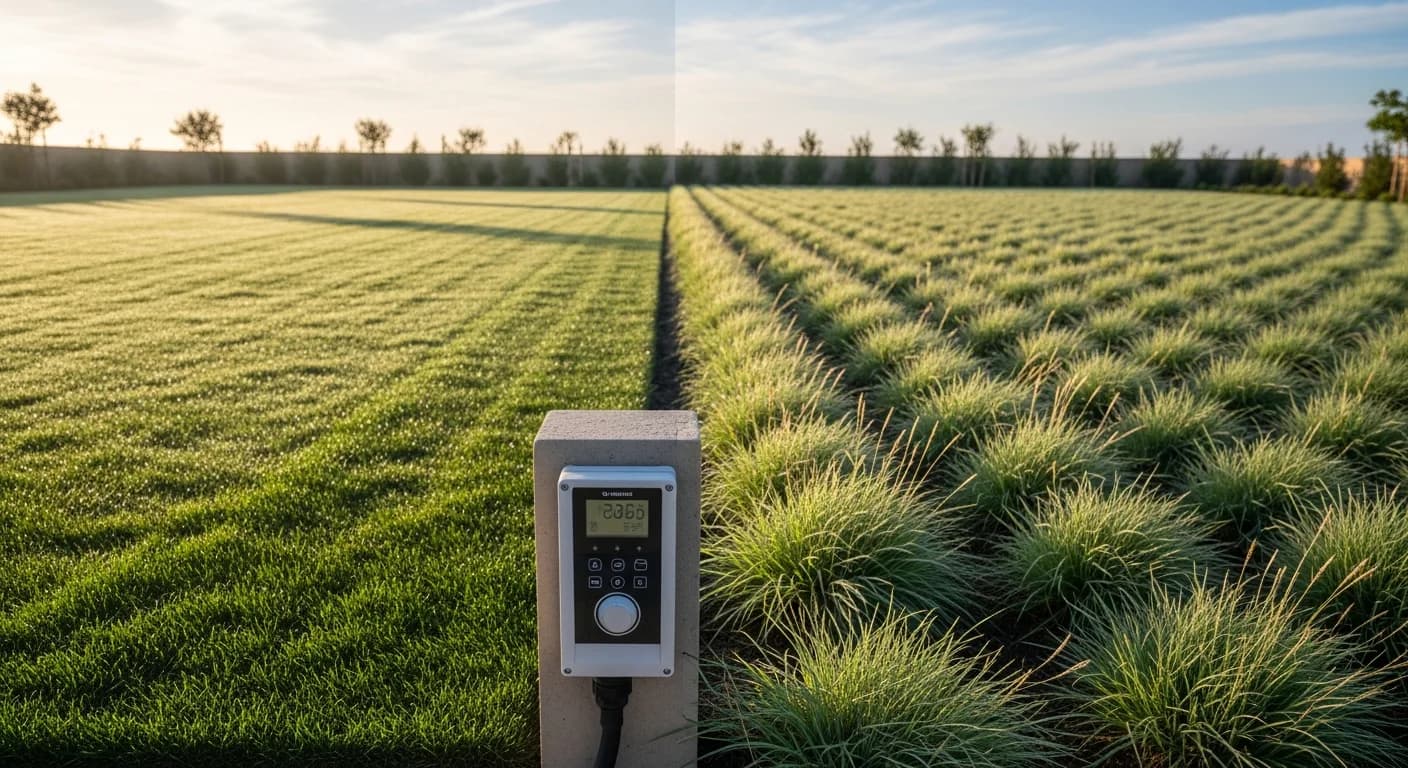
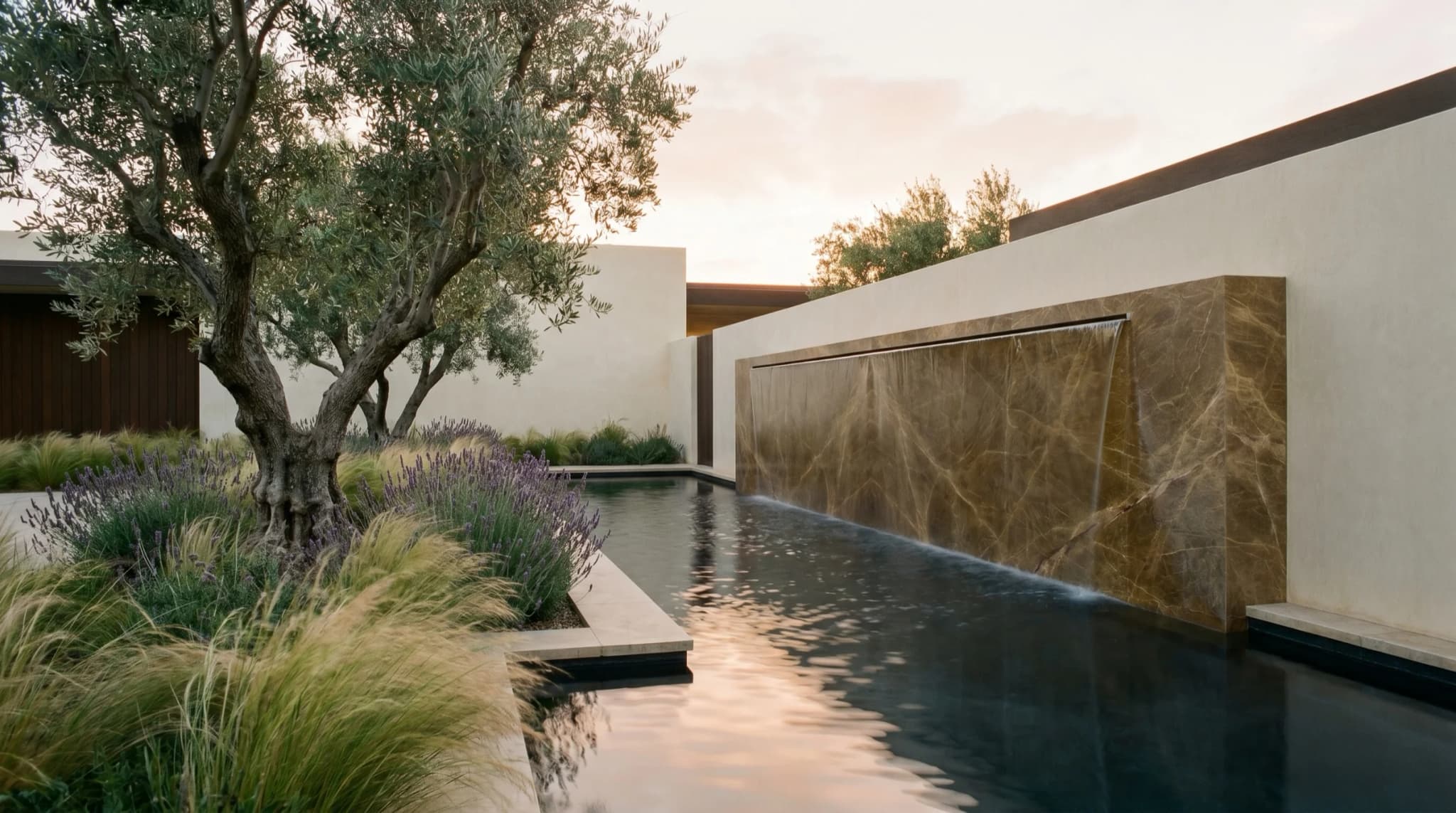
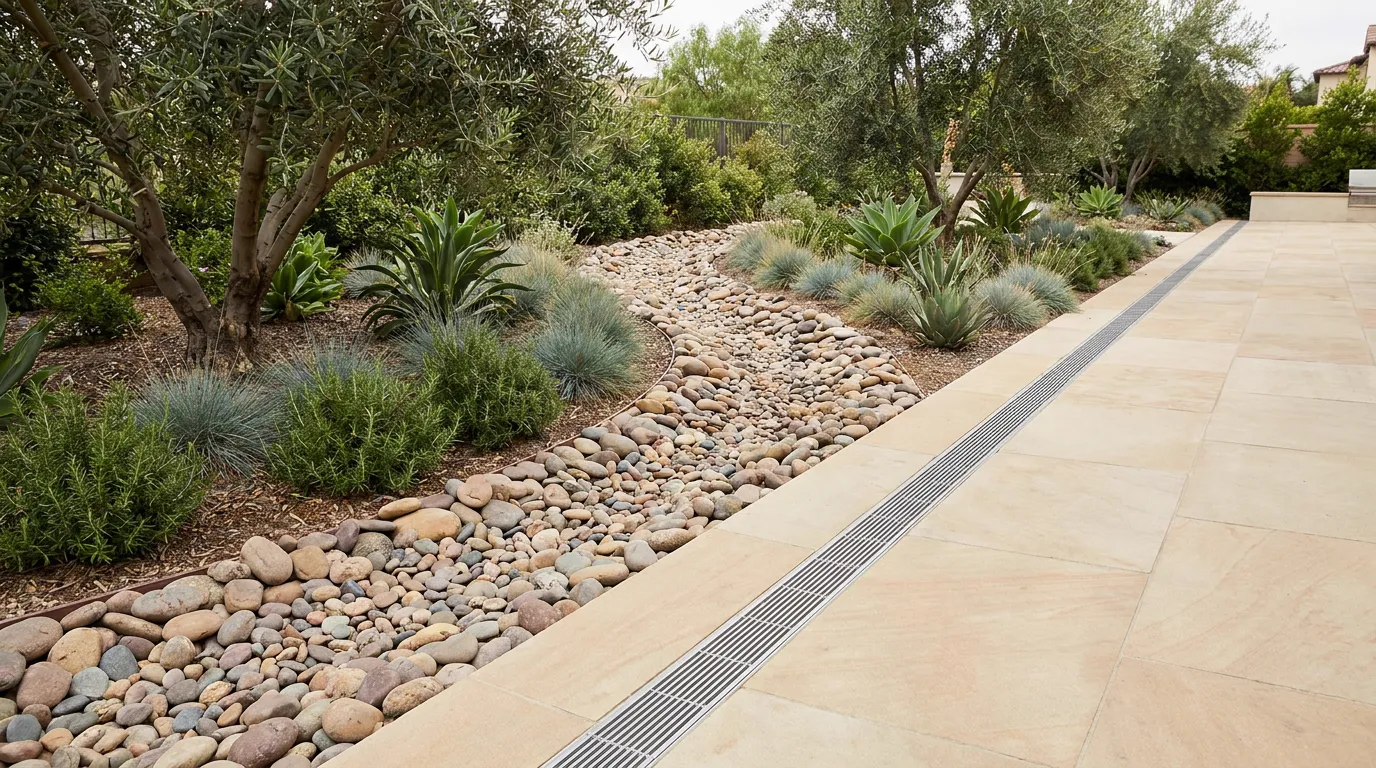
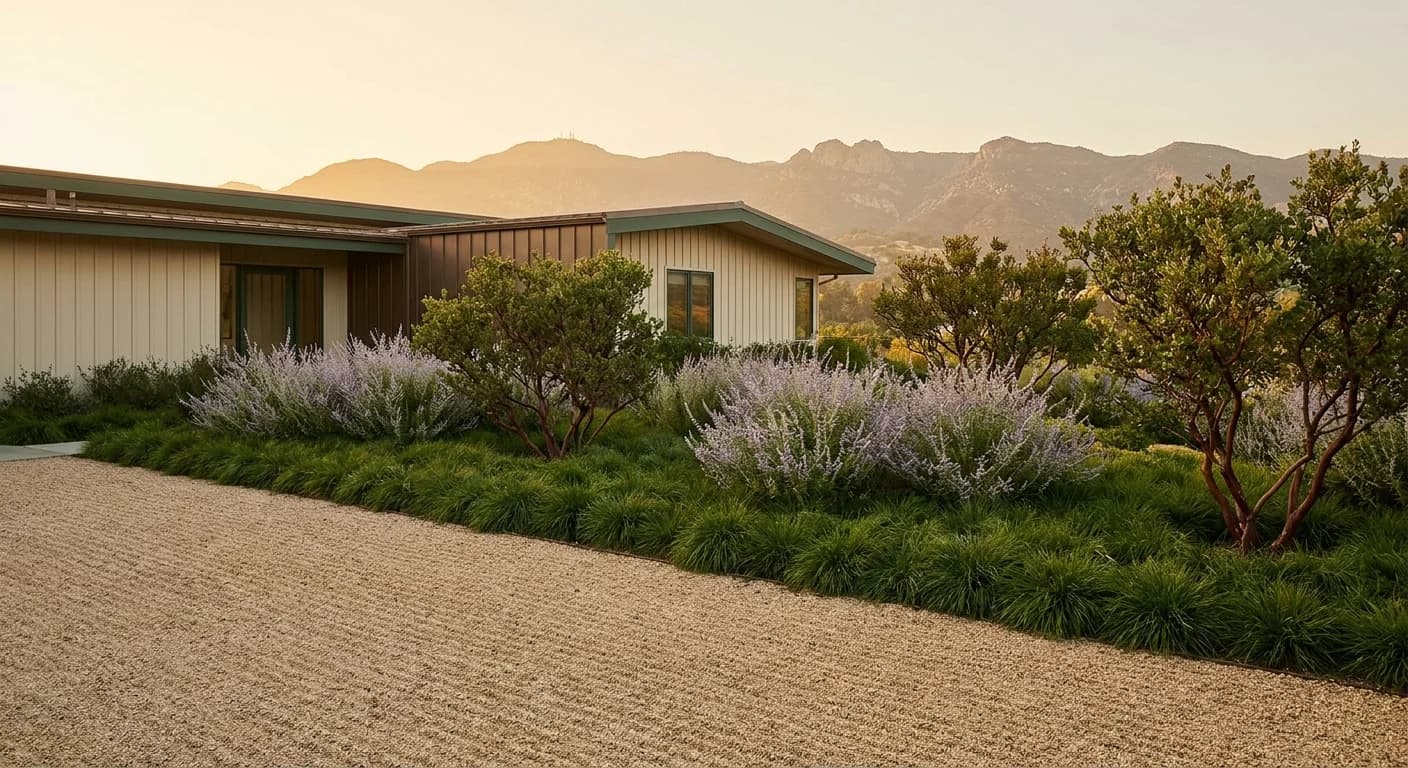
The goal is a composed site: mineral surfaces where they reduce risk, planting used with spacing and care, irrigation tuned for health without waste, and maintenance that keeps dead material from accumulating. Fire-prudent does not have to mean barren.