Studio note
When a lawn keeps failing, the answer may not be another treatment. It may be a better surface: carex, kurapia, dymondia, meadow, gravel, or hardscape.
Repeated lawn fungus is often a symptom of a deeper mismatch: too much shade, poor drainage, compacted soil, irrigation drift, heavy use, or a turf species that does not belong in that microclimate. Treating the disease without changing the system can become an expensive loop.
Diagnose water, shade, and traffic first
Before replacing or treating a lawn, look at water distribution, sun exposure, soil compaction, pet traffic, drainage, mower habits, and night irrigation. A lawn may be failing because the site is asking it to do the wrong job.
Choose the surface by use
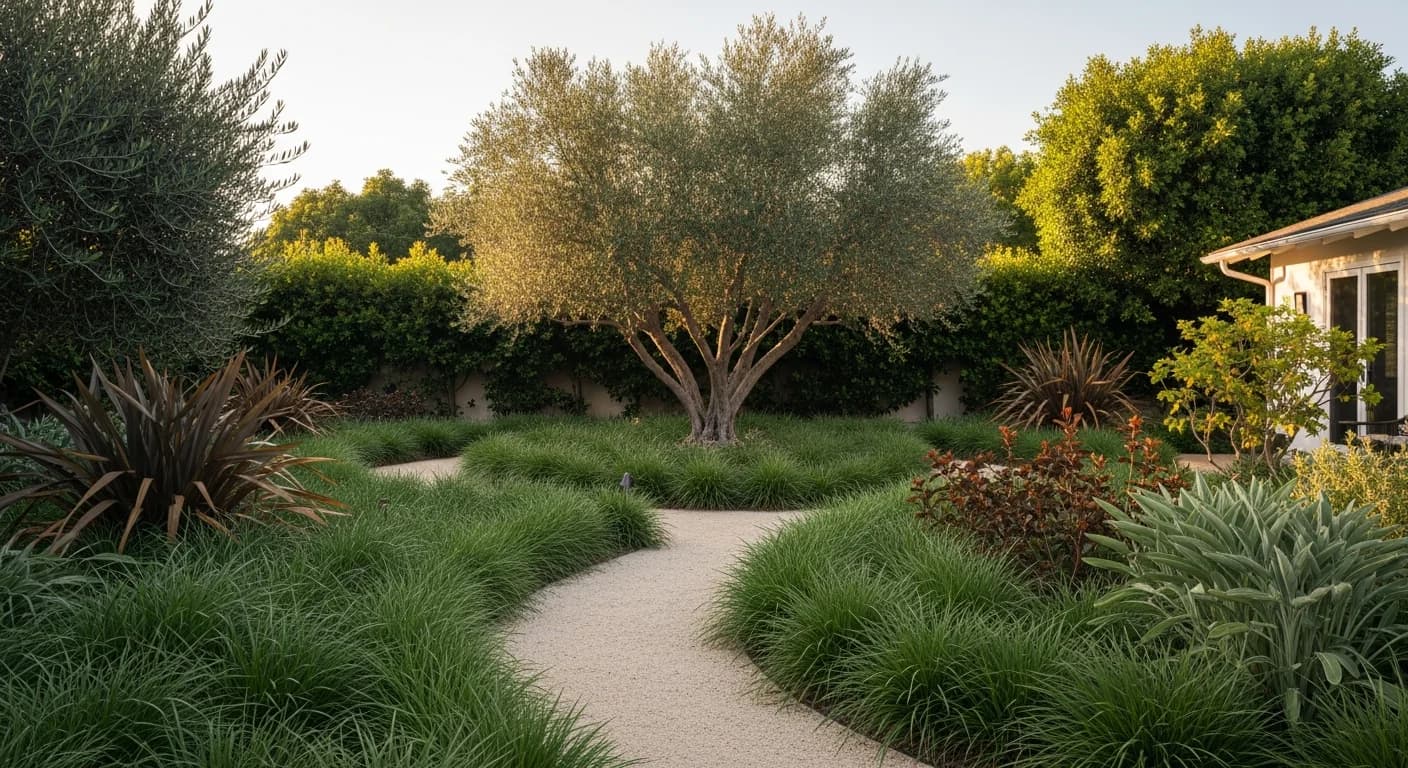
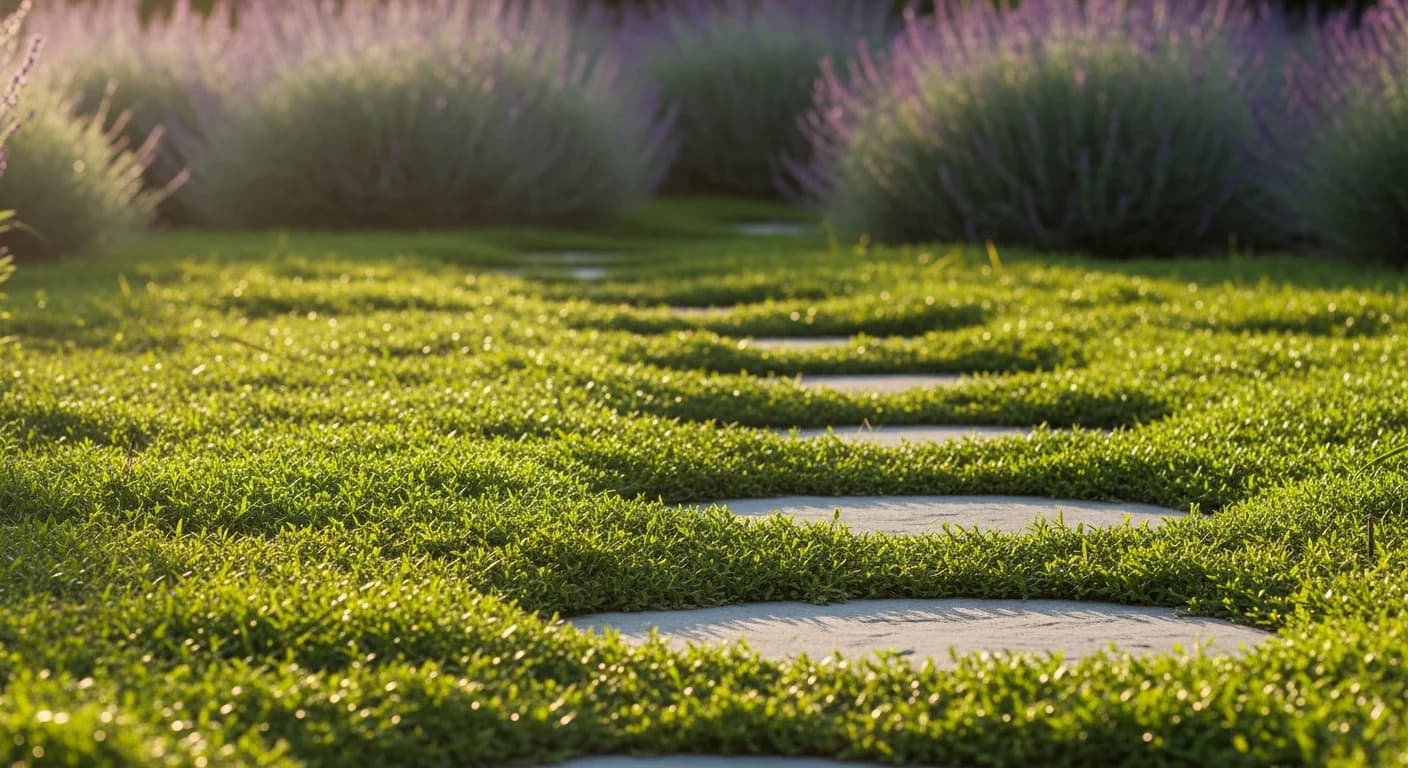
Carex can read soft and meadow-like. Kurapia can work as a resilient low-water groundcover in the right conditions. Dymondia is useful in low foot-traffic joints and edges. Gravel, pavers, and planting bands may be better for circulation or high-use zones. The replacement should match the behavior of the space.
Stewardship lens
A lawn alternative is only successful if the maintenance team understands the new surface. Installation and care have to be designed together.
Keep what is functional
Not every lawn should disappear. Play, pets, sports, and community use may justify turf. The design move is to keep functional lawn where it earns its water and replace ornamental lawn where another surface would perform better.