Studio note
A material guide for driveways, patios, courtyards, and outdoor rooms: what changes the price, what changes the look, and what protects the installation.
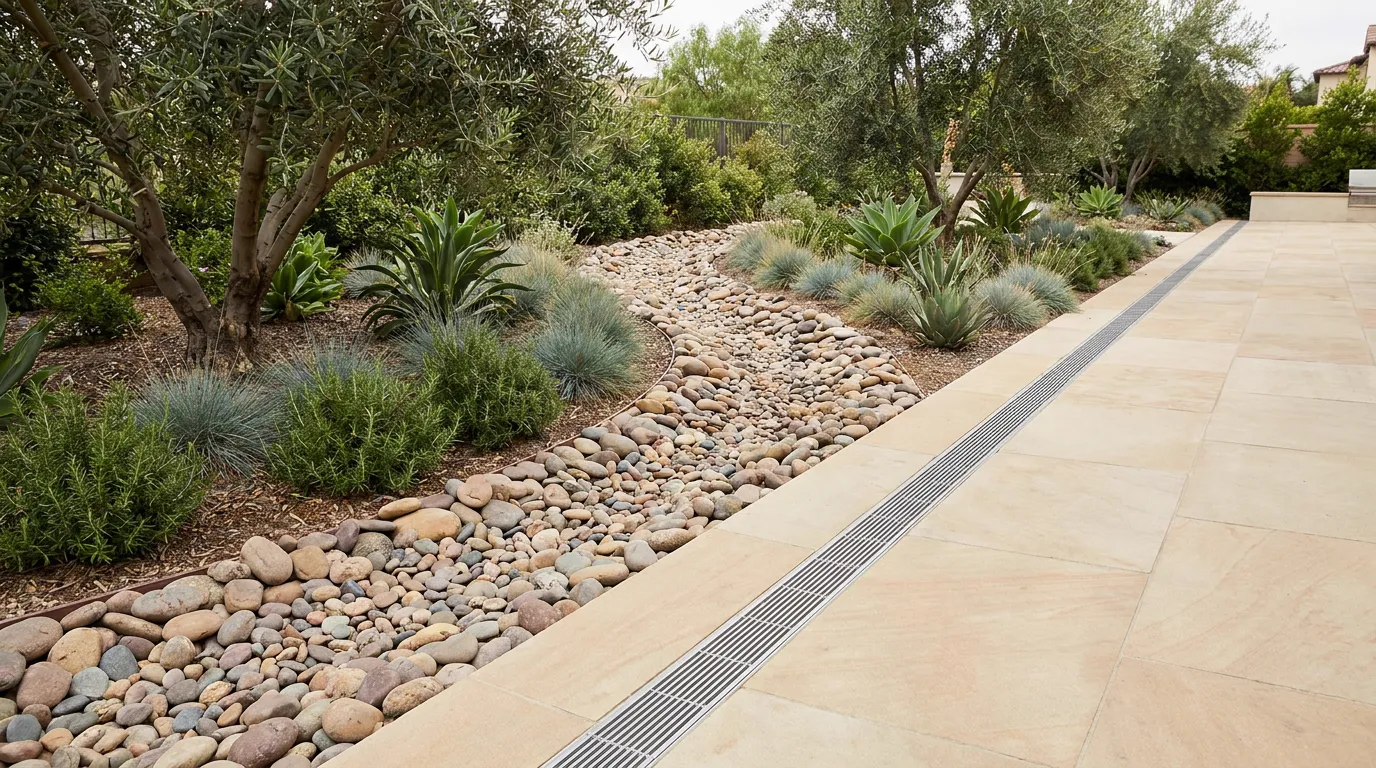
Paver selection is usually framed as color and price. That is too shallow. The real decision includes load, base, drainage, edge restraint, finish, slip resistance, heat, joint width, maintenance, and how the material relates to the architecture.
Concrete pavers: disciplined and flexible
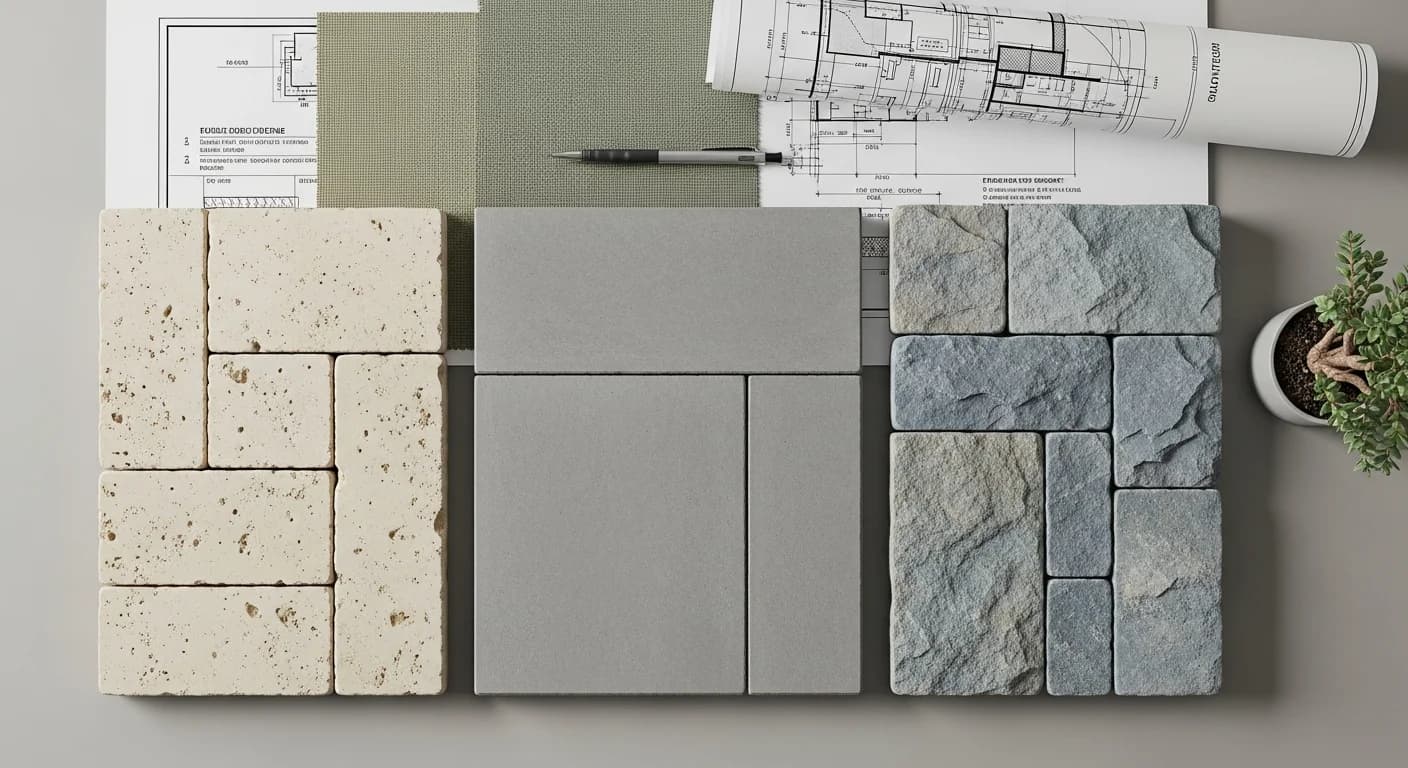
Concrete pavers are often the practical workhorse. They offer a wide range of formats and can perform well on patios, paths, and driveways when the base, compaction, and edge restraint are handled correctly. The risk is choosing a color blend or pattern that dates quickly.
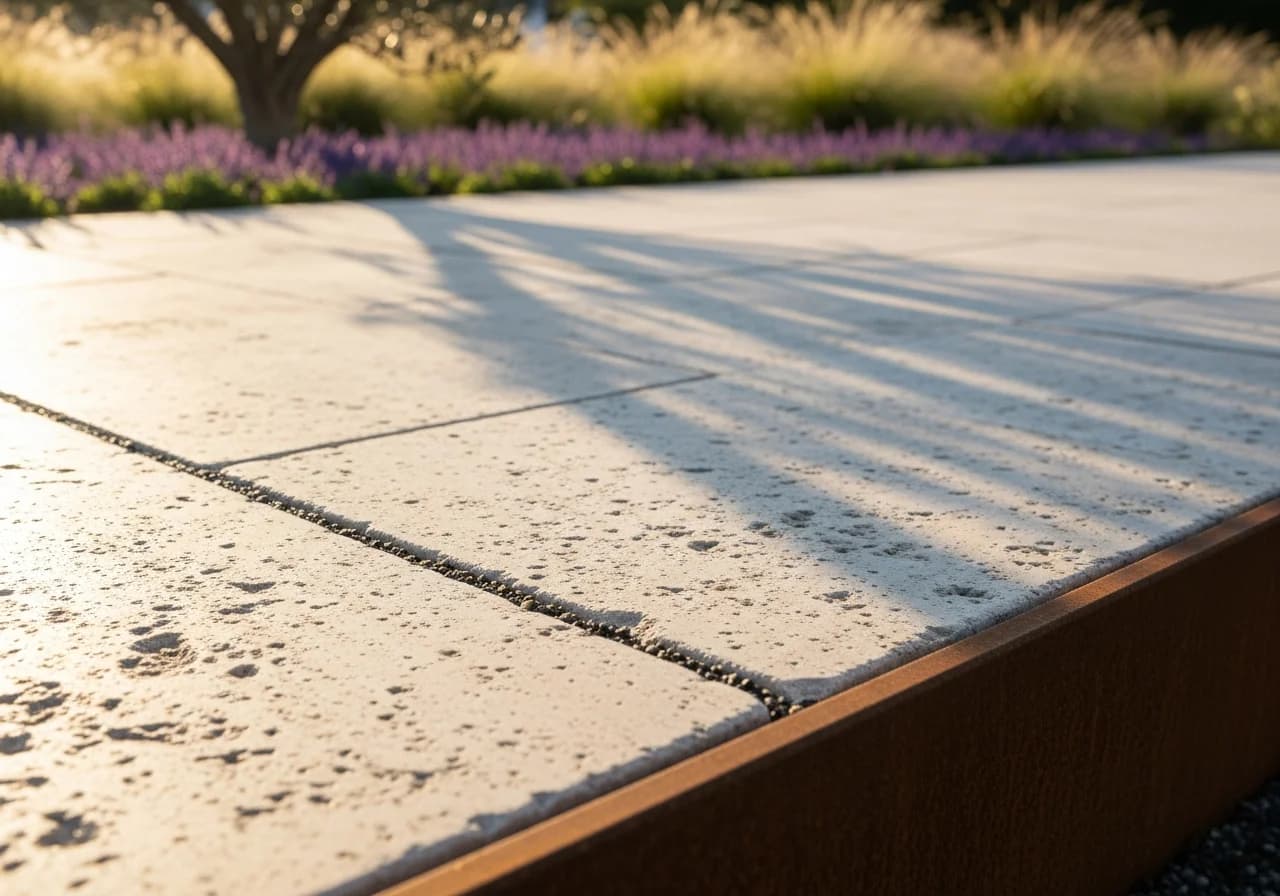
Travertine: warm, but not automatic
Travertine can be beautiful in Mediterranean and coastal work because it carries warmth without feeling loud. It still needs correct thickness, finish, base strategy, and sealing decisions. In pool and dining areas, slip resistance and staining behavior matter as much as tone.
Porcelain and natural stone
Porcelain gives a clean, precise surface but requires more technical installation discipline. Natural stone brings character and variation, but the project needs a strong layout plan so the variation feels authored rather than random.
Hardscape truth
Most hardscape failures are not caused by the paver. They are caused by water, base prep, edge restraint, and poor detailing.
Pricing belongs in context
Material price is only one part of the investment. Access, demolition, drainage correction, base depth, cuts, borders, steps, walls, lighting, and irrigation coordination can matter more than the paver unit cost. That is why GREENPLACE reviews scope after site diagnosis instead of quoting hardscape from a menu.